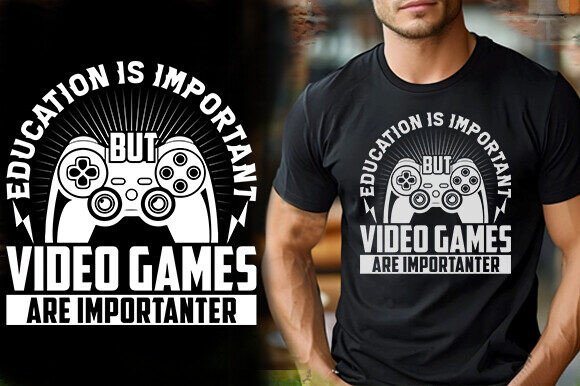
Education Is Important But Video Games A
When it comes to the intersection of education and entertainment, few topics spark as much debate as the role of video games. While many see video games as a distraction from learning, others argue that they can be powerful tools for engagement and knowledge acquisition. This article explores the idea of Education Is Important But Video Games A, examining how video games can complement traditional learning methods and what makes them valuable in modern education.
The Role of Video Games in Learning
Video games have evolved far beyond simple entertainment. Today, they are recognized as interactive platforms that can enhance learning in various ways. From problem-solving simulations to historical reenactments, games offer immersive experiences that can make complex subjects more accessible. For educators and students alike, this means that Education Is Important But Video Games A is not just a catchy phrase—it's a practical approach to learning.
One of the key benefits of video games in education is their ability to foster critical thinking and decision-making skills. Many games require players to strategize, adapt, and solve problems in real time. These skills are transferable to academic and professional settings, making video games a valuable supplement to traditional teaching methods.
Features That Make Video Games Educational
What sets educational video games apart from their entertainment-focused counterparts is their design. These games often incorporate elements like feedback systems, adaptive difficulty levels, and goal-oriented challenges. Such features help maintain engagement while ensuring that learning remains a central focus.
For instance, games that teach coding or mathematics often use visual and interactive elements to explain abstract concepts. This aligns with the principle of Education Is Important But Video Games A, where the medium itself becomes a tool for understanding. Additionally, multiplayer games can encourage collaboration and communication, further enhancing their educational value.
Who Can Benefit From Educational Video Games?
Students of all ages can benefit from integrating video games into their learning process. Younger learners may find math or language games more engaging than traditional textbooks, while older students might appreciate simulations that model real-world scenarios. Educators, too, can use these tools to create dynamic lesson plans that cater to different learning styles.
Professionals and businesses also recognize the potential of video games in training and development. For example, medical professionals use simulation games to practice procedures, while corporate trainers employ gamified platforms to improve employee performance. In this context, Education Is Important But Video Games A takes on a broader meaning, emphasizing the versatility of games in diverse fields.
Practical Applications of Educational Video Games
Consider a classroom where students use a game to explore historical events. Instead of reading about the American Revolution, they might navigate through a virtual timeline, making choices that affect the outcome of the story. This hands-on approach not only deepens understanding but also makes learning more enjoyable. Similarly, science classes can use games to simulate experiments, allowing students to test hypotheses without the need for physical materials.
Another example is the use of video games in language learning. Interactive storytelling and dialogue-based games can help learners practice vocabulary and grammar in a fun and engaging way. This reinforces the idea that Education Is Important But Video Games A is not just about content delivery—it's about creating meaningful learning experiences.
Strengths and Limitations of Educational Video Games
While video games offer numerous advantages, they are not a one-size-fits-all solution. One of the main strengths of educational games is their ability to cater to individual learning paces. Players can revisit challenging sections or skip ahead if they feel confident. However, this flexibility also means that some students may become overly reliant on the game, neglecting other forms of learning.
Additionally, the effectiveness of educational video games depends on the quality of the design. Poorly constructed games may fail to engage players or convey the intended lessons. Therefore, it's essential to evaluate games based on their educational value, user experience, and alignment with learning objectives. This brings us back to the concept of Education Is Important But Video Games A, which encourages thoughtful integration rather than blind adoption.
How to Evaluate the Suitability of Educational Games
Before incorporating video games into an educational setting, it's important to assess their suitability. Start by identifying the learning goals and determining whether a game aligns with those objectives. For example, a math game should reinforce mathematical concepts, while a history game should provide accurate information about historical events.
Next, consider the target audience. A game designed for elementary students may not be appropriate for high schoolers, and vice versa. It's also crucial to ensure that the game is age-appropriate and free from inappropriate content. Finally, test the game with a small group of users to gather feedback and make necessary adjustments.
In conclusion, Education Is Important But Video Games A represents a shift in how we think about learning. By embracing the potential of video games, educators and learners can create more engaging and effective educational experiences. Whether used in classrooms, homes, or professional settings, these games have the power to transform the way we acquire and apply knowledge.